The Role of 3D Scanning and Digital Twins in On-the-Job Training
December 22, 2025A significant hurdle in the manufacturing industry today involves a shrinking and aging workforce, coupled with the need to rapidly upskill new employees. Traditional training methods often fall short in complex environments, leading to prolonged learning curves and increased safety risks.
However, the world of manufacturing engineering is evolving, offering innovative solutions. By embracing digital tools, businesses can transform how they prepare their teams.
We believe that combining 3D laser scanning with digital twin technology is not just for design and optimization; it is a vital tool for effective on the job training and attracting new talent.
Building the Foundation
Imagine having a perfect, virtual replica of your entire facility, accessible from anywhere.
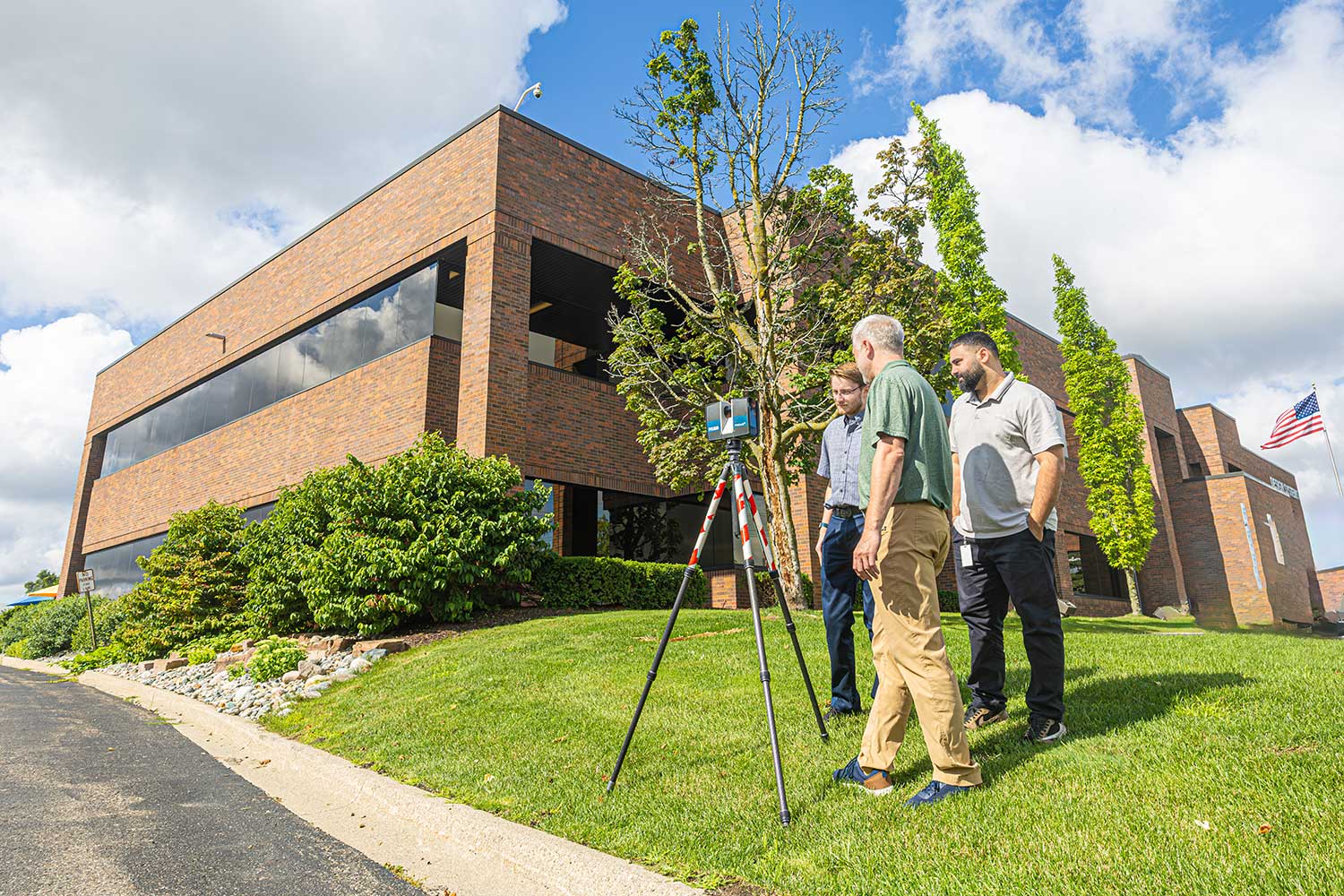
This becomes possible through 3D laser scanning. This process involves using advanced scanners to capture millions of data points from a physical environment, creating a precise, millimeter-accurate three-dimensional image often called a point cloud. This digital capture is incredibly detailed, showing every pipe, machine, and structural element exactly as it exists in the real world.
From this rich dataset, a digital twin technology is born.
Digital twin technology is a dynamic, living, virtual representation that precisely mirrors the real-world environment and its operations. A true digital twin can even integrate real-time operational data, allowing it to accurately simulate changes and predict performance.
Design Systems Canada (DSC) specializes in creating these high-fidelity virtual models for complex industrial spaces, providing a robust foundation for a multitude of applications.

Transforming On-the-Job Training
The most impactful benefit of a digital twin for workforce development lies in its ability to create unparalleled training opportunities.
Safe Learning Environments: Trainees can interact with virtual machinery and processes in a completely safe, simulated environment. This eliminates the risk of injury, damage to expensive equipment, or disruption to ongoing production during the learning phase. They can practice complex procedures repeatedly until proficiency is achieved, without real-world consequences.
Accelerated Upskilling: Visual, interactive models help workers learn complex processes far faster than by simply reading manuals or shadowing experienced personnel. The ability to explore a virtual facility, manipulate virtual controls, and observe simulated outcomes provides a deeper, more engaging, and ultimately more effective learning experience.
Virtual Commissioning: Imagine training your team on a brand-new production line before the physical equipment has even been installed on the shop floor. Digital twin technology makes this a reality, allowing for pre-emptive training that drastically reduces downtime and accelerates the transition to full operational capacity once new machinery arrives.

Solving the Workforce Pain Points
The strategic use of these advanced technologies directly addresses critical challenges facing today's industrial sector:
Attracting New Talent: Younger generations entering the workforce are often tech-savvy and expect modern tools. Companies that embrace cutting-edge solutions like VR-based training and digital twins present a forward-thinking image, making them more appealing to new recruits.
Retaining Tribal Knowledge: As experienced workers retire, a wealth of critical operational knowledge can be lost. Digital twins provide an excellent platform to document and digitize the institutional know-how of long-term employees, preserving essential information for future generations of workers.
Standardizing Safety: Training within a digital twin environment allows for safety protocols to be built directly into the learning modules. This ensures consistent adherence to standards, complementing services like Pre-Start Health and Safety Reviews (PSRs) by embedding safety practices from the very start of a worker's experience.
Why Choose Design Systems Canada (DSC)?
Design Systems Canada in Windsor, Ontario, has decades of experience navigating the complexities of industrial operations.
Our services extend beyond simply providing a 3D laser scanning service; we offer comprehensive manufacturing engineering solutions that include project management, process simulation, and the full development of digital twins.
We partner with clients in diverse markets such as aerospace & defense, parcel handling, and heavy truck & equipment, ensuring that our solutions are tailored to specific industry needs and regulatory requirements.
From Industry 4.0 initiatives to laser scanning and virtual commissioning, our dedication to delivering top-notch industrial design solutions is recognized by our numerous awards and long-standing client relationships.
Conclusion
By leveraging 3D laser scanning to create precise virtual replicas and developing robust digital twin technology, companies can revolutionize their approach to on the job training. This leads to safer, more efficient, and more attractive workplaces. Investing in these solutions reduces training costs, improves worker safety, and future-proofs your operations against an ever-changing landscape.
Take the next step in preparing your workforce for tomorrow.
Contact the experts at Design Systems Canada today to discuss your next facility project, or visit our website to explore our full range of Industry 4.0 and manufacturing engineering services. Let us help you build a smarter, safer, and more skilled team.